The golden era of Pakistan’s film industry gradually began to fade after 1975. An industry that had once enjoyed a golden period first entered a silver phase and then slipped into continuous decline. There were many reasons for this. First, colour television began to make films seem less attractive, and whatever was left was further undermined by the arrival of VCRs.
But while Pakistan’s film industry was going through this decline, the country’s sporting scene was beginning to rise. Among the sports personalities whose popularity was steadily increasing during this period was Imran Khan.
This was an era when Punjabi films dominated Pakistan’s cinema. Meanwhile, between 1983 and 1992, India was also producing films centred around cricket, with some Indian cricketers being portrayed as heroes.
In this report, we tell the story of the first known attempt, around 35 years ago, to make a film about Imran Khan’s life. The actor selected to play Imran Khan had even been paid an advance, but the film was never completed.
This was not the only attempt to bring Imran Khan’s life to the big screen. Similar efforts surfaced from time to time in the years that followed.
One such attempt was made by well-known director Jamshed Mahmood Raza, popularly known as Jami, after the success of his film Moor. Around a decade ago, inspired by the Indian film 83, he announced plans to make a film about Pakistan’s 1992 World Cup victory. According to media reports, a script was prepared and actors were also selected to play Imran Khan and Wasim Akram, but the project was never completed.
In 2018, during Imran Khan’s tenure as prime minister, there was considerable talk about a film titled Kaptaan. Actor Abdul Mannan was set to play Imran Khan, while Saeeda Imtiaz was to portray Jemima Khan. However, that film too was never completed or released.
So now let us go back 35 years, to the time when the first attempt was made to produce a film about Imran Khan’s life, tentatively titled Cricketer.
The Imran Khan Lookalike
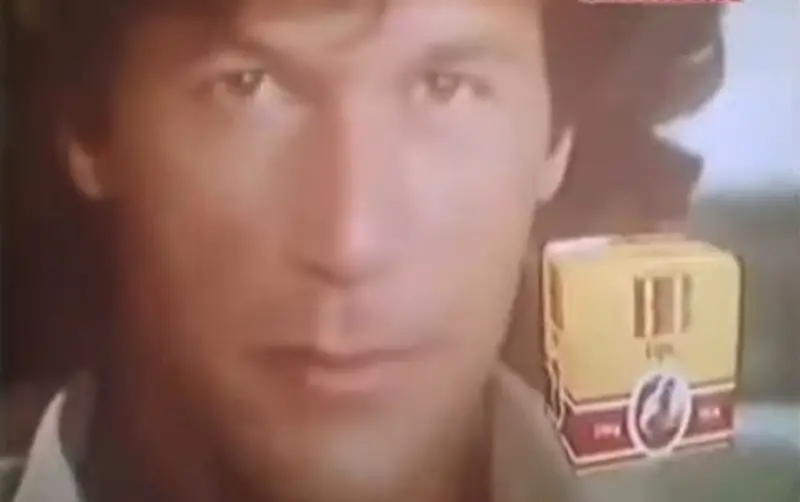
In 1988, a television commercial featuring Imran Khan for BB Tips Tea was being aired in Pakistan. In response, a rival company decided to launch its own “Captain Top Star” campaign to compete with it. The model selected for the campaign was none other than Jahanzeb Khan.
This was an era when Punjabi films dominated Pakistan, while Indian cinema was also heavily influenced by Punjabi stars.
Sunny Deol, Kumar Gaurav and Sanjay Dutt were dominating the box office because the era of Shah Rukh Khan, Aamir Khan and Salman Khan had not yet arrived.
Nevertheless, Bollywood was also interested in Pakistani cricketer Imran Khan. Many people still remember the famous scene in Sharjah in which actor Shammi Kapoor presented Imran Khan with the winning trophy.
Between 1983 and 1992, when Imran Khan was at the height of his cricketing career, several Indian films were made around cricket. Whether it was Kumar Gaurav’s All-Rounder, Aamir Khan’s Awwal Number, or Chunky Panday’s Teesra Kaun?, critics have noted that the influence of Imran Khan’s star image could be seen, in one way or another, in these films.
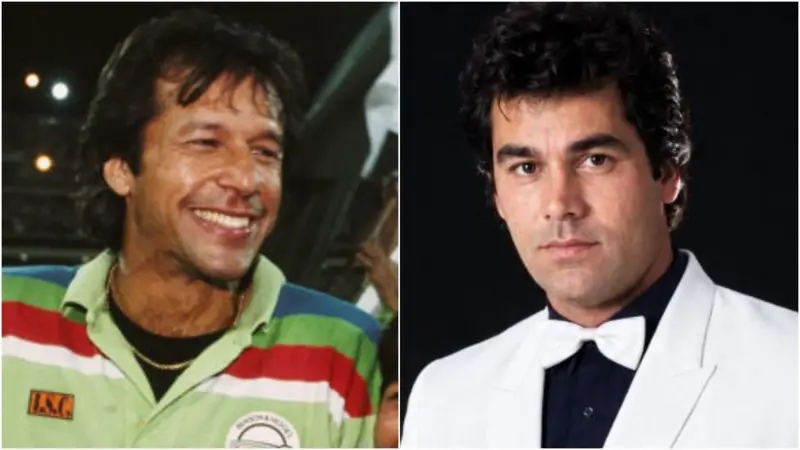
In Pakistan too, actors with a similar physical appearance began to be promoted. Among them were Ismail Shah, Javed Sheikh and Jahanzeb Khan — clean-shaven, long-haired and fair-complexioned actors.
Yet despite this trend, Pakistan did not produce films on cricket in the same way India was doing.
And so, the first attempt to make a film about Imran Khan’s life, titled Cricketer, met the same fate that was often seen in Pakistani films during wedding scenes: Sultan Rahi would arrive, chaos would erupt, and then came the historic line:
“Oye! This marriage cannot happen!”
That was the era when Punjabi films ruled Pakistan and Sultan Rahi was one of the country’s most popular actors.
But by now you may be wondering: what did Jahanzeb Khan have to do with all this?
Jahanzeb Khan claims that he was personally selected by Imran Khan to play the cricketer’s role. It is worth remembering that Jahanzeb had already gained considerable fame as an Imran Khan lookalike.
Jahanzeb Khan’s Account
My first encounter with Jahanzeb Khan was on Facebook while I was researching Pakistan’s “cowboy” style films. At the time, he told me:
“You are crying over Mr Rahi becoming a cowboy. He actually wanted to become a cricketer.”
His comment was in reference to the film Cricketer.
We contacted Jahanzeb to learn more about the story.
Speaking to BBC Urdu, Jahanzeb Khan said:
“In August 1989, I had just returned from India. I had gone there with Salma Agha, who was working as a co-producer on the Indian version of Javed Fazil’s Pakistani film Bazaar-e-Husn, titled Pati, Patni Aur Tawaif. She wanted me to play the same character in that film that I had played in Pakistan — that of a wealthy and arrogant businessman.”
According to Jahanzeb:
“But I had no intention of working in India. I returned with memories of meeting my favourite actor Vinod Khanna, whom I affectionately called Vinoo Paji, as well as actor and director Dev Anand. At that time, Dev Anand was close to completing his cricket-themed film Awwal Number.”
Jahanzeb says Dev Anand had approached Imran Khan to play the lead role in his film, but the Pakistani cricketer declined.
Jahanzeb claims that when Dev Anand saw him, he said:
“I wish we had met earlier. I would have had you play the role I had envisioned for Imran Khan.”
Since India had a large number of film magazines at the time, Jahanzeb’s meeting with Dev Anand was reported in magazines. The news eventually reached London, where people interested in producing a film about Imran Khan were also following developments.
The Producer From Rochdale
Jahanzeb says that some time after his return to Pakistan, a woman investor from Rochdale, Najma Kazmi, tracked him down at a studio in Lahore.
“She was staying at the Pearl Continental Hotel in Lahore. She came to the studio and left her card with someone, asking them to tell Jahanzeb to meet her.”
According to Jahanzeb, Najma Kazmi told him during their first meeting that she wanted to make a film about Pakistani cricketer Imran Khan. She had already visited Imran Khan’s home in Zaman Park and met him personally.
Jahanzeb says Najma Kazmi was new to the film business and did not have many contacts in Pakistan.
According to him, Imran Khan — who had already declined Dev Anand’s offer — also refused to act in this film.
Jahanzeb says Imran Khan had no objection to a film being made about his life. The real issue was that he did not want to act in it.
This, according to Jahanzeb, opened the door for him to play Imran Khan.
Jahanzeb says that, in addition to being a model, he came from a military family. His father had been a friend and batchmate of General Burki, who was Imran Khan’s maternal uncle. Because of this connection, Jahanzeb would occasionally meet Imran Khan.
Between 1987 and 1993, Jahanzeb appeared in several Urdu and Punjabi films.
In 1988, Imran Khan’s BB Tips Tea commercial was being broadcast on television. In response, a rival company launched its own “Captain Top Star” campaign, and Jahanzeb was once again selected as the model.
The Film Industry of That Era
To understand the film industry of that time, it is important to remember that it was dominated by a handful of personalities from Punjab. Those who were in their good books often found themselves cast in films.
Jahanzeb claims:
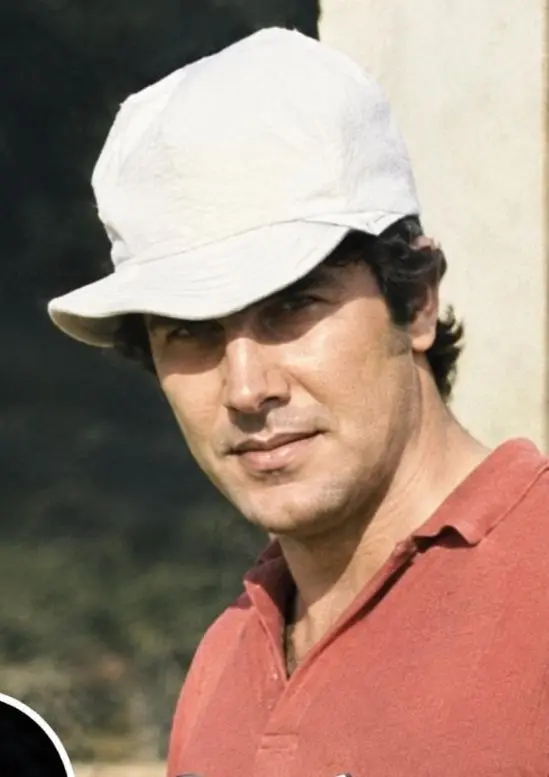
“Calls would come for good roles. Usually, more attention was paid to the actor’s name than to his work because these people were also investing the money and controlling the box office. And the major point was that films produced under their patronage were rarely delayed.”
According to Jahanzeb, Najma Kazmi signed him during their very first meeting and paid him an advance of 150,000 Pakistani rupees to play Imran Khan.
“I gave her my dates as well,” he says.
Jahanzeb explains that in those days, films were often signed verbally after an initial understanding. Dates were also given in the same informal manner, unlike today, when contracts and formal documentation are standard.
He says actors were generally paid in cash. Cheques, according to him, were mainly received for work on PTV.
Preparing to Play Imran Khan
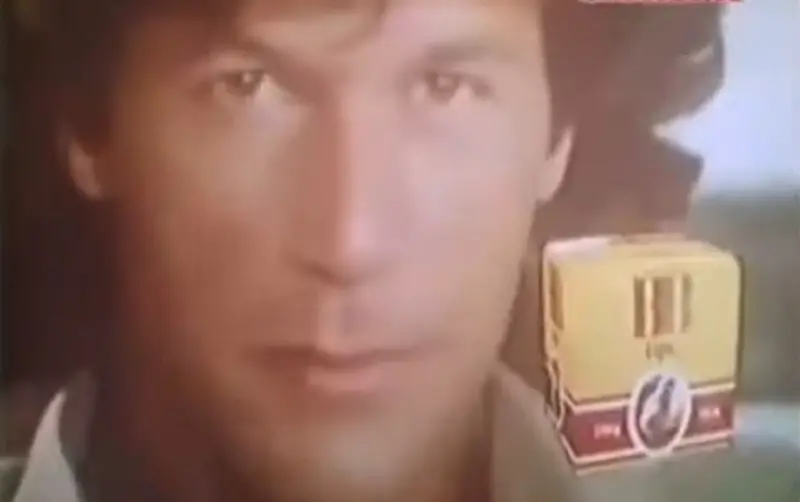
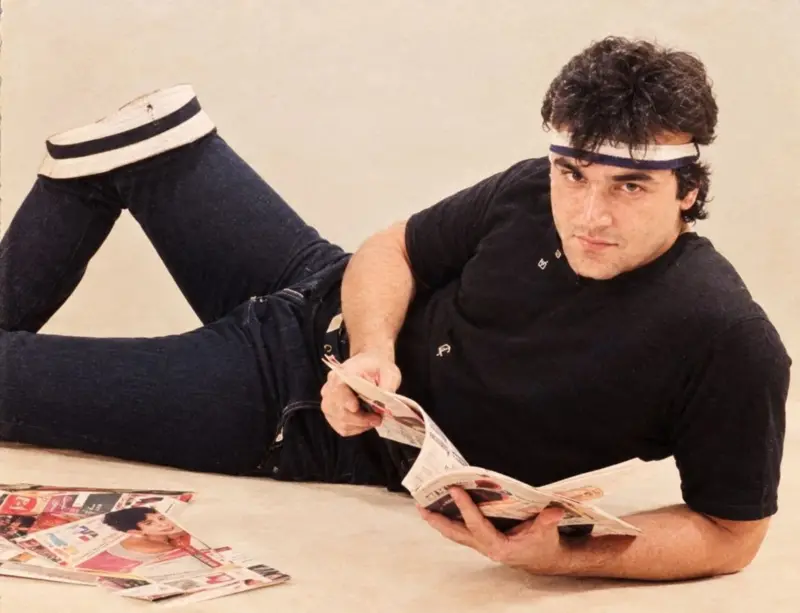
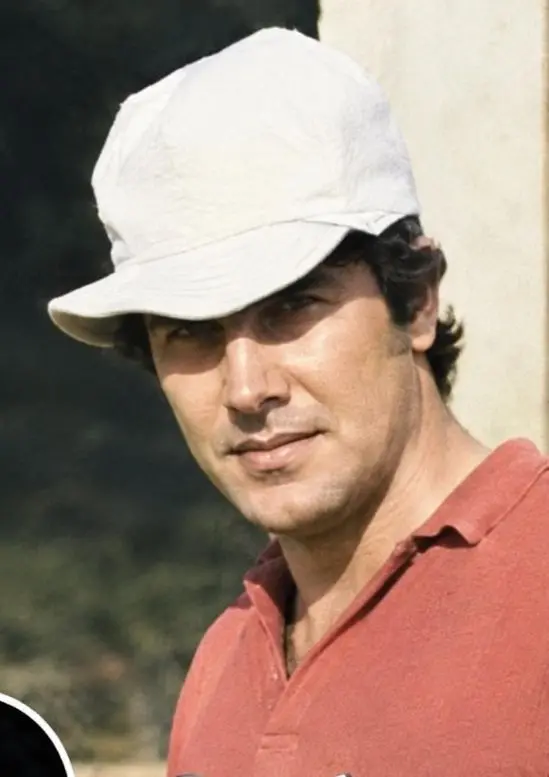
Some time after his first meeting with Najma Kazmi, Jahanzeb had a photoshoot at Gaddafi Stadium. Wearing cricket gear, he practised bowling and batting.
Because he had already been working continuously in films, Jahanzeb knew that a cricket-based film would be physically demanding. He therefore continued practising in the nets during this period.
“The practice we were doing was my own personal practice. There was no shooting involved. I would go to Gaddafi Stadium with my servant and stand in one corner of the nets to practise.
“I would have someone stand as a batsman and bowl to him, and I would also practise batting myself. My only objective was to regain my fluency, develop rhythm in batting and get my bowling rhythm back.”
According to Jahanzeb, the photoshoot was also conducted for the film’s poster.
“I was doing all this so that when the motion picture was eventually made, it would look perfect. Every film banner needs a good photograph. That was the purpose of the photoshoot.”
Jahanzeb showed me a photograph on a floppy disk and said:
“This is from that very photoshoot. If I had known that you would bring this story out 35 years later, I would have taken the entire roll of film from Najma Kazmi!”
The Film That Never Happened
According to Jahanzeb, work on the story was about to begin and there were hopes that the film would be released before the 1992 World Cup.
“By then, it had also become widely known that Jahanzeb would play Imran Khan.”
But then, one day, Najma Kazmi called him in a state of panic and told him that she was no longer making the film.
Jahanzeb says:
“I could sense that something was wrong, but I did not know that things would reach this point. Najma Kazmi told me that once it became known in the industry that I was playing the role, different people began approaching her.
“Some would say, ‘Take me for this role,’ while others would put their own names forward. Those who believed they could play the character started approaching Najma Kazmi.”
Jahanzeb claims that popular Punjabi film actor Sultan Rahi himself approached the producer and offered to play the lead role.
According to Jahanzeb, Sultan Rahi argued that he was often criticised for being confined to traditional characters involving the gandasa, or axe, and that he therefore deserved the opportunity to portray a modern national hero.
Jahanzeb says the pressure and competing claims eventually became too much for the producer. Before production could begin, she abandoned the project.
“We were at the poster stage. Payments had been made and the story was being written. But we had not yet reached the motion-picture stage. Shooting had not started.
“Before the shooting could begin, she was put under so much pressure that apparently she became frightened.”
Jahanzeb claims that intimidating people was not unusual in the film industry of that era.
“I think perhaps the same thing happened with this film. So much pressure was put on her that the woman became frightened. She abandoned the idea of making the film and told me, ‘I don’t want my money back. You gave me your time, so you can keep the money.’”
Jahanzeb says that at the time, six hundred rupees could cover a household’s monthly groceries and petrol cost around ten rupees per litre.
“150,000 rupees was a very large amount of money at that time.”
Jahanzeb Leaves the Film Industry
According to Jahanzeb Khan, he was already becoming frustrated with the film environment in Punjab. After this incident, he became disillusioned with the film industry altogether.
He completed the remaining projects he had already committed to and, in 1993, married the well-known celebrity chef Farah.
He subsequently left the film industry and began living a family life away from cinema.
Sultan Rahi’s Cricket Connection
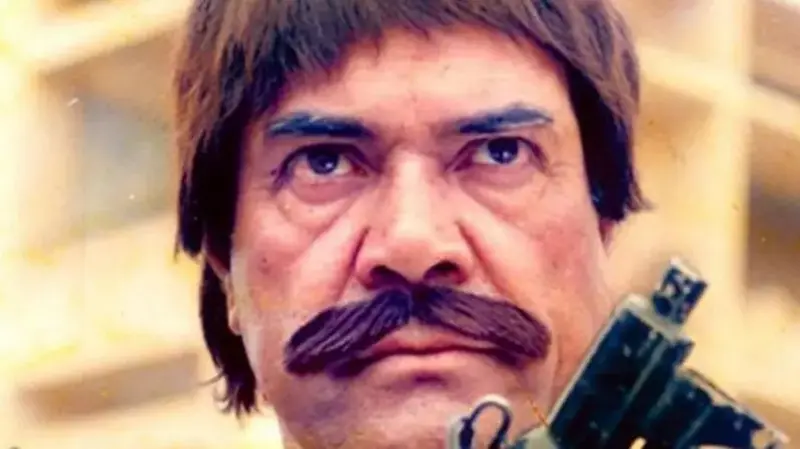
Sultan Rahi never appeared in Najma Kazmi’s Cricketer, but he found another way to bring cricket and cinema together.
His film Chhakka was released around the same time that Cricketer was originally expected to reach cinemas — around the 1992 World Cup.
In the climax of Chhakka, Sultan Rahi finally appeared to get his opportunity to become Imran Khan — at least on screen.
Using a cricket bat and wickets, he takes on the villains. In the final sequence, Sultan Rahi hits the villain with a bat so powerfully that the man is sent flying beyond the boundary line. He then uses the wicket to finish the fight.
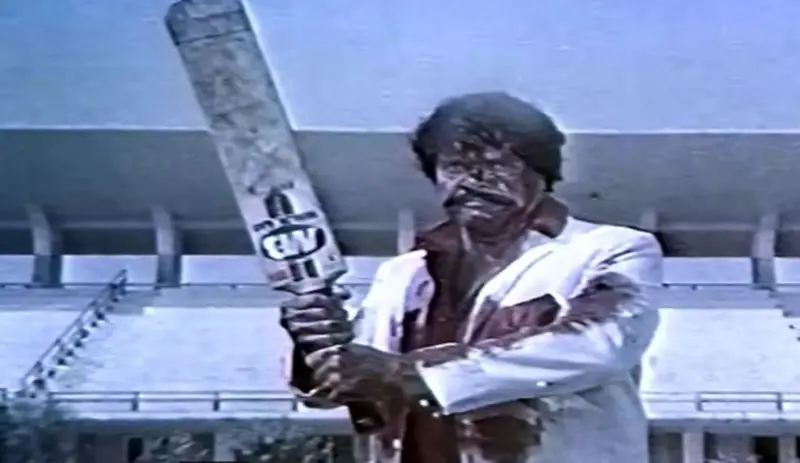
And so, while the film that was supposed to portray Imran Khan’s life never made it to the screen, the dream of combining Pakistan’s biggest cricketing icon with its biggest Punjabi film star found its own unusual ending — on the cricket field, in a Sultan Rahi film.